Buying the Skies: The Future of Finnair, LOT, and Condor

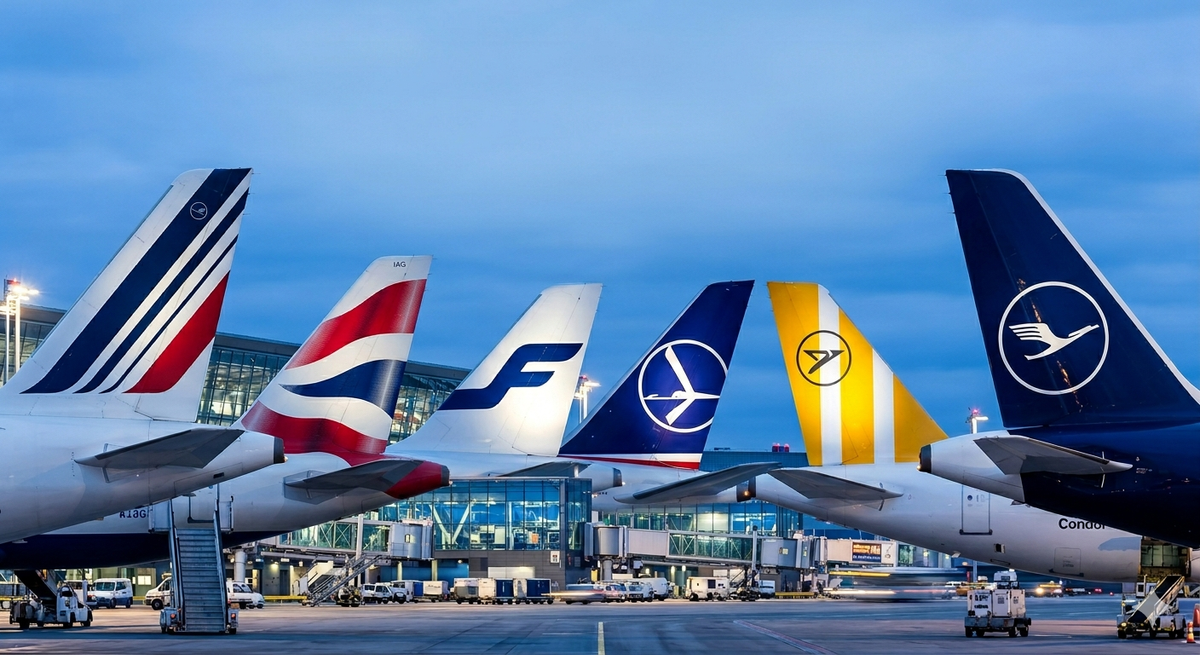
Consolidation is the name of the game in 2026. In the high-stakes world of European aviation, being "medium-sized" is a dangerous place to be. As fuel costs rise and the battle for airport slots intensifies, the "Big Three" airline groups are looking to eat or be eaten.
We’ve already seen the giants move into Italy and Scandinavia, but the hunt isn't over. Three major players - Finnair, LOT Polish Airlines, and Condor - are standing at a crossroads. Each offers something the Big Three desperately need: a shortcut to Asia, a grip on the booming Polish market, or a ready-made holiday business. Here is the breakdown of who might buy them, why they’re worth billions, and what it means for the future of the skies.

The First Wave: Survival of the Fittest (2008–2012)
The 2008 financial crisis was the ultimate "evolve or die" moment for European aviation. Before the crash, the continent was a patchwork of inefficient, state-backed carriers that often prioritised national pride over profit. But as oil prices spiked and business travel evaporated, the cracks became chasms. This era birthed the giants we see today: the merger of British Airways and Iberia created IAG, while the Lufthansa Group aggressively expanded by absorbing Swiss, Austrian Airlines, and Brussels Airlines. These wasn’t just about growth; it was a defensive shield against the rising tide of low-cost carriers like Ryanair that were beginning to eat the legacy airlines' lunch.

The Second Wave: The Great Grounding (2020–2023)
If 2008 was a tremor, COVID-19 was an earthquake. The pandemic did the unthinkable: it grounded entire fleets for years and burned through billions in cash reserves. While government bailouts kept many flags flying, they came with a heavy price tag and a realisation that "going it alone" was no longer a viable long-term strategy. As the world reopened, the power dynamic shifted. Stronger players like Air France-KLM used the recovery period to clean up their balance sheets and look for bargains, leading to the recent high-profile grabs by Air France-KLM and Lufthansa Group for SAS and ITA Airways respectively.

Finnair: The Nordic Gateway at a Crossroads
The IAG Perspective: A Case of Redundancy
At first glance, IAG might seem like a natural fit. However, a deeper look at the strategic alignment suggests that for the owners of British Airways and Iberia, Finnair might be more of a "nice to have" than a "need to have."
• The AJB Factor: Finnair is already deeply integrated into the Atlantic Joint Business (AJB). IAG already captures the benefits of Finnair’s transatlantic feed without having to take on the carrier's operational risks or balance sheet.
• The Asian Conflict: IAG and Qatar Airways already share a deep strategic bond (and ownership stake), and Finnair’s sixth-freedom Asian flows through Helsinki would directly compete with IAG’s preference for routing traffic through Doha or London.
• Yield Pressure: Finnair’s domestic and European networks are notoriously low-yielding. For IAG, adding a short-haul network that is constantly under fire from low-cost giants like Ryanair offers little incentive.
• The Russian Detour: Since 2022, the closure of Russian airspace has fundamentally broken Finnair’s "shortest route to Asia" USP. In early 2026, flights to Tokyo are routinely taking over 11 hours (up from 9), adding significant fuel, crew, and over-flight fees.
The Lufthansa Group: A Defensive "Northern Shield"
While IAG may hesitate, the Lufthansa Group has a much more compelling reason to pull the trigger:
• Blocking Air France-KLM: Following Air France-KLM’s successful move into Scandinavia with the acquisition of SAS, the Nordic market has shifted significantly toward the SkyTeam alliance.
• Strategic Encirclement: For Lufthansa, acquiring Finnair wouldn't just be about growth; it would be a defensive manoeuvre to prevent Air France-KLM from achieving a total monopoly on high-yield Nordic corporate travel.
• The "Financial Shield": As an independent player, Finnair remains vulnerable to the "boom-and-bust" cycles of global aviation. Under the Lufthansa umbrella, Finnair would gain access to cheaper credit and massive collective purchasing power, providing a vital "financial shield" for its unique polar gateway.
The Air France-KLM Factor: Focus Elsewhere
Despite their recent aggression in the M&A market, Air France-KLM is unlikely to be a suitor for the Helsinki-based carrier.
• Full Plate: Having recently moved into Scandinavia by grabbing SAS, the group is currently focused on cleaning up its own balance sheet and integrating its new acquisition.
• Regulatory Hurdles: After the recent wave of "high-profile grabs" by the Big Three, European regulators are watching competition levels closely. Adding Finnair to a portfolio that already includes SAS might trigger significant antitrust concerns regarding Nordic market dominance.

LOT Polish Airlines: The Eastern Gateway to Opportunity
LOT Polish Airlines occupies one of the most strategic geographic locations in Europe. As the 2026 consolidation wave peaks, LOT represents the last major "unaligned" asset that could shift the balance of power in Central and Eastern Europe (CEE).
Lufthansa Group: The Stagnant Partnership
Despite LOT’s long-standing membership in the Star Alliance, the relationship with the Lufthansa Group has often been described as one of "benign neglect."
• The Integration Paradox: While LOT and Lufthansa share frequent flyer programs and codeshares, Lufthansa has arguably failed to integrate LOT into its core multi-hub strategy in any meaningful way. Instead of fostering Warsaw as a major Eastern hub, Lufthansa has historically used its own hubs in Frankfurt and Munich to "siphon off" high-yield long-haul traffic from Poland.
• Competition Over Collaboration: Rather than investing in LOT, Lufthansa has prioritised the acquisition of ITA Airways. This has left LOT in a precarious position—technically an ally, but functionally a competitor for the same Eastern European feeder traffic.
• A Missed Opportunity: For Lufthansa, a full acquisition would be a sharp U-turn from years of treating Poland as a secondary market. However, if they don't act, they risk losing their grip on the CEE region entirely to a more aggressive rival.
IAG: The "Unconstrained" Growth Engine
For IAG, LOT represents a "blank canvas" for expansion that its Western European hubs simply cannot match.
• The CPK Advantage: Poland’s new mega-hub, the Central Communication Port (CPK), offers a unique opportunity: a high-capacity, low-cost feeder hub that is entirely unconstrained by the night-flight bans and slot shortages plaguing London Heathrow.
• No Backtracking to Asia: Unlike London or Madrid, Warsaw is geographically "on the way" for traffic moving from Western/Central Europe to Asia. Routing passengers through Warsaw removes the "backtracking" penalty of several hours, allowing IAG to compete aggressively in the volume connecting market without the financial costs and constraints of its Western hubs.
• Strategic Diversification: Following the regulatory hurdles of other deals, IAG is hungry for growth assets that diversify its revenue away from its traditional North and South American strongholds.
Air France-KLM: The Challenger in the East
While Air France-KLM has recently focused on the Nordic region with its acquisition of SAS, LOT presents a different, yet equally compelling, strategic prize.
• A Pressure Valve for Congestion: Both Paris (CDG) and Amsterdam (AMS) are nearing their environmental and capacity limits. Acquiring LOT would provide a vital "pressure valve," allowing the group to shift connecting Eastern European and Asian flows to a modern, expandable hub in Warsaw.
• Building a "SkyTeam East": Having successfully pulled SAS away from Star Alliance, Air France-KLM could repeat the playbook with LOT. Bringing LOT into SkyTeam would effectively dismantle Lufthansa’s traditional dominance in the CEE region and create a seamless "Northern and Eastern" network.
• Fleet Synergies: As LOT continues its fleet modernisation, the massive collective purchasing power of the Air France-KLM group could accelerate this transition, providing the "financial shield" needed to turn Warsaw into a high-tech alternative to Western Europe’s congested mega-hubs.

The Independence Trap: Can Condor Survive Outside the Big Three?
Condor is arguably the most complex acquisition target in Europe today. While its 2026 fleet of brand-new A330neos and A32Xneos makes it a modern and efficient asset, its business model and complicated history with the Lufthansa Group make it a difficult puzzle for any suitor to solve.
A Shadow of the Past: The Lufthansa Legacy
To understand Condor’s current position, one must look at its heritage. For decades, Condor served as the primary leisure and charter arm of the Lufthansa Group, providing holiday-goers with connections to Mediterranean and tropical destinations. Even after Lufthansa fully divested its stake in 2009, the two airlines remained "frenemies," bound together by historical infrastructure and operational dependencies.
The Hub Trap: Life at Frankfurt (FRA)
Operating out of Frankfurt (FRA) puts Condor in the shadow of its former parent. Despite being Germany’s fourth-largest carrier, Condor remains a "sub-scale" competitor at its own home base.
• The Feeder Crisis: A significant portion of Condor’s long-haul success has historically depended on "feeder" traffic from Lufthansa. However, this lifeline is fraying. Following a landmark legal battle in 2024 and 2025, the Higher Regional Court of Düsseldorf and the European Commission ultimately backed Lufthansa’s right to terminate its decades-old "Special Prorate Agreement" with Condor. While standard interlining remains, Condor can no longer rely on the preferential pricing or guaranteed connectivity it once enjoyed.
• Infrastructure Dependency: Beyond flights, Condor still relies on Lufthansa for critical passenger services at Frankfurt, including access to Lufthansa’s business lounges for its premium passengers. This creates an awkward dynamic where Condor must pay its biggest rival to provide a "premium" experience for its own customers.
The IAG and Air France-KLM Conundrum
For IAG or Air France-KLM, acquiring Condor as a way to break into the German market is fraught with difficulty.
• The Yield Gap: IAG’s business model is built on high-yield, premium corporate travel. Condor, by contrast, is a dedicated leisure brand. Its revenue is subject to the seasonality and price sensitivity of the holiday market, which rarely produces the stable, high-margin yields that IAG demands.
• No Way In: Using Condor to establish a meaningful presence in Germany would require a massive, expensive overhaul. Without their own short-haul feeder network in Germany, IAG or Air France-KLM would find themselves owning a "hub" airline with no hub connectivity, effectively forced to continue relying on Lufthansa to fill their seats.
The Regulatory Dead-End
If an acquisition were to happen, the most logical suitor would be a return to the Lufthansa Group. However, the regulatory hurdles in 2026 are nearly insurmountable.
• Monopoly Concerns: European regulators have become increasingly aggressive in blocking deals that consolidate market share at a single hub. Given Lufthansa’s existing stranglehold on Frankfurt, absorbing its only major long-haul competitor would likely be viewed as a "bridge too far."
• The Antitrust Shadow: The bitter legal battles over feeder flights have soured the relationship and highlighted the competitive tension. Any attempt to merge would trigger intense scrutiny from the German Federal Cartel Office, which has already spent years trying to protect Condor from Lufthansa’s dominance.
The Verdict: An Asset Without a Home?
Condor’s 100% modernised widebody fleet is a major draw, but its "sub-scale" status at Frankfurt leaves it in a strategic limbo. For now, it remains a high-quality asset in search of a strategic miracle.

Beyond Survival: Why Bigger Means Better for the Modern Flyer
While critics often fear that fewer airlines mean higher prices, the reality for the modern traveler can be surprisingly bright. Consolidation isn't just about shrinking the field; it’s about strengthening the network.
For a carrier like LOT Polish, joining a major group could mean a massive influx of capital to accelerate its fleet modernisation, turning Warsaw into a seamless, high-tech alternative to the congested mega-hubs of the western Europe.
For Finnair and Condor, the conversation around M&A isn’t just about growth—it’s about resilience in a volatile era. For Finnair, a carrier that has spent years pivoting its entire business model after the closure of Russian airspace, joining a major group would provide the "financial shield" needed to protect its unique polar gateway. Similarly, for Condor, an acquisition offers a path out of the boom-and-bust cycles of independent leisure flying.
Under the wing of a "Big Three" giant, these airlines gain access to cheaper credit and massive collective purchasing power, ensuring that those signature striped fleets and Arctic connections don’t just survive the next global shock, but thrive through it. For the traveler, this means a more reliable airline that can afford to invest in the latest fuel-efficient cabins and sustainable technologies that smaller, independent players simply can't bankroll alone.